






 Powrót


Types of Vegetarianism. What Are the Benefits of a Vegetarian Diet?
Vegetarianism is becoming increasingly popular in society. Many people wonder whether a plant-based diet is safe for their health. Are you considering eliminating meat from your menu? Read on to learn about the pros and cons of a vegetarian diet.
In this article, you will learn:
What Is Vegetarianism?
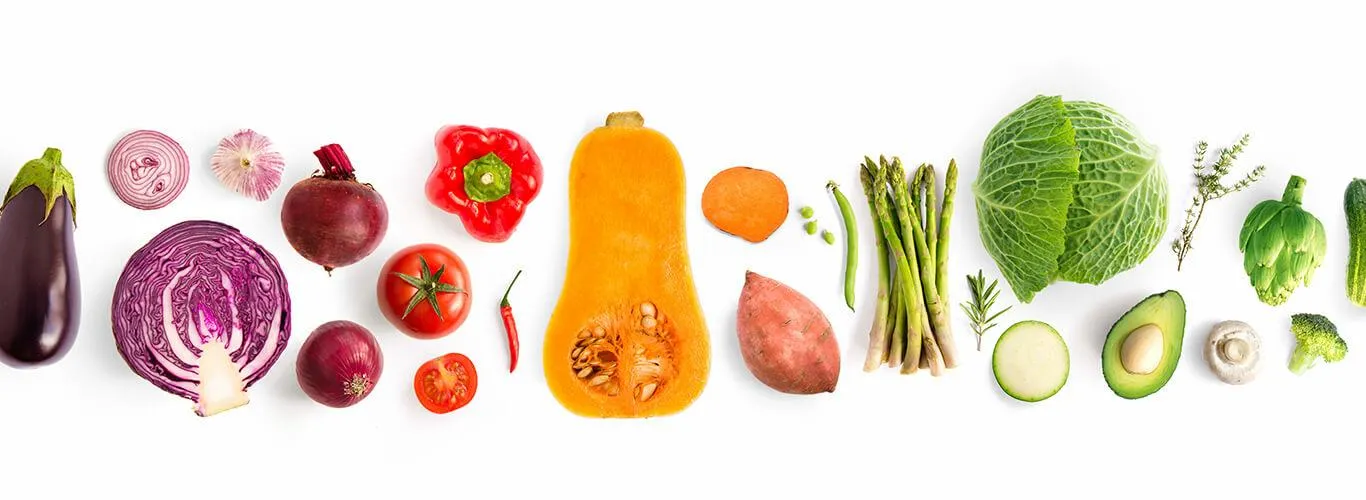
A vegetarian diet is a way of eating that involves limiting or eliminating animal-based products. Its foundation includes vegetables, fruits, whole grains, seeds, nuts, and legumes. People choose to go vegetarian for various reasons, including:
- religious (e.g., Seventh-day Adventists, Hinduism, Islam, Buddhism),
- ethical,
- health-related,
- economic,
- humanitarian and ecological (e.g., concerns about animal farming and environmental degradation).
Types of Vegetarianism
All forms of vegetarianism exclude mammalian meat. However, approaches to other types of meat and animal-derived products vary significantly among vegetarians. The table below outlines the main types of vegetarian diets and their characteristics:
| Mammalian Meat | Poultry | Fish & Seafood | Eggs | Dairy | Honey | |
|---|---|---|---|---|---|---|
| Semi-vegetarian | - | + | + | + | + | + |
| Pollo-vegetarian | - | + | - | + | + | + |
| Pescowegetarianizm | - | - | + | + | + | + |
| Lacto-ovo-vegetarian | - | - | - | + | + | + |
| Ovo-vegetarian | - | - | - | + | - | + |
| Lacto-vegetarian | - | - | - | - | + | + |
| Vegan | - | - | - | - | - | - |
Semi-vegetarianism is one of the least restrictive forms of vegetarianism. It excludes red meat (e.g., pork, beef) but allows for limited consumption of poultry, fish, dairy, and eggs. Because of this, people following a semi-vegetarian diet are at the lowest risk of nutritional deficiencies.
Interest in this diet has grown in recent years due to its potential benefits in managing lifestyle diseases. However, due to the occasional inclusion of poultry and fish, some do not classify it as a true vegetarian diet.
Lacto-ovo-vegetarianism, which permits both eggs and dairy products, typically provides sufficient nutrients to meet all dietary needs.
The most restrictive form of vegetarianism is veganism, which eliminates all animal-derived products (meat, fish, eggs, dairy, and even honey). Vegans often also avoid using products or clothing made from animal materials and choose cosmetics not tested on animals.
Proper food selection is essential in veganism, as a poorly balanced vegan diet carries a higher risk of nutrient deficiencies.
Vegetarianism Around the World
Is the vegetarian diet a modern invention? Not at all. Vegetarianism dates back to ancient times, originating in India and the Middle East. Today, it is growing rapidly in popularity, especially in Western Europe and the United States1.
The proportion of vegetarians varies by country, ranging from 1% to 4% globally but reaching as high as 40% in India. In the U.S., vegetarians accounted for 3.3% of the adult population in 2016, with nearly half identifying as vegans. In Canada, around 4% of people follow a vegetarian diet.
The popularity of plant-based diets continues to rise. In the UK, for example, the number of vegetarians more than doubled over 13 years—from 2.1% of the population in 1984 to 5.4% in 19972.
In Europe, the countries with the highest proportion of vegetarians are Germany (9%), Italy (7%), and Switzerland (5%). In Poland, vegetarians account for about 1% of the population. While interest in vegetarianism is increasing in Poland, many people still perceive it as unhealthy. According to CBOS, as many as 41% of Poles believe that avoiding meat leads to an unhealthy diet3.
Pros and Cons of a Vegetarian Diet
Following the principles of a vegetarian diet usually offers many health benefits. However, a poorly planned plant-based diet may result in nutritional deficiencies. Here are the main advantages and disadvantages:
Advantages of a Vegetarian Diet
- Higher intake of complex carbohydrates and fiber, and lower intake of simple sugars. This supports digestive health and helps stabilize blood glucose levels.
- Lower intake of cholesterol, saturated fats, and trans fats, with higher intake of essential unsaturated fats—leading to improved lipid profiles.
- Low energy density and high nutrient density of foods—making it easier to maintain a healthy body weight.
- Greater intake of vitamins C and E, folate, carotenoids, flavonoids, magnesium, boron, and potassium. These compounds combat free radicals, slow aging, and reduce cancer risk.
- Lower sodium intake and higher potassium intake—helping to prevent hypertension.
- Reduced risk of exposure to harmful substances found in meat (e.g., polycyclic aromatic hydrocarbons, nitrosamines, antibiotics, veterinary drugs, salmonella, trichinella).
Disadvantages of a Vegetarian Diet
- Lower intake of long-chain omega-3 fatty acids, which may require supplementation depending on the diet type.
- Potential risk of inadequate energy and protein intake if the diet is not properly balanced—leading to malnutrition.
- Excess fiber and phytates may impair absorption of certain minerals.
- Deficiency of vitamins B12 and D, which must be supplemented.
- Risk of deficiencies in calcium, iron, zinc, and iodine, due to both low dietary intake and poor bioavailability.
- Higher intake of anti-nutritional substances (e.g., glucosinolates, protease inhibitors, alkaloids, saponins, pesticide residues), which can reduce nutrient digestibility.
Properly planned vegetarian diets can be just as healthy as traditional omnivorous diets. Like all dietary patterns, success lies in the right food choices and proportions.
Research shows that vegetarian diets are linked to better blood biomarkers and healthy body weight. Well-constructed vegetarian diets can be recommended for all life stages, including pregnancy, lactation, infancy, childhood, and adolescence4.
Is Vegetarianism Healthy?
According to major global dietetic organizations, including the Academy of Nutrition and Dietetics, well-balanced vegetarian diets are healthy. They meet nutritional needs and may even support the prevention and treatment of certain diseases.
Numerous studies confirm the positive health impact of vegetarian diets. Vegetarians tend to have lower total cholesterol, triglycerides, and LDL cholesterol. A vegetarian diet is also associated with a lower risk of:
- ischemic heart disease,
- hypertension,
- type 2 diabetes,
- certain cancers, particularly colorectal, breast, and prostate cancers.
People on plant-based diets often also consume less alcohol, avoid smoking, and engage in more physical activity. Their BMI is typically 1–2 kg/m² lower compared to meat-eaters. Therefore, the reduction in mortality from chronic diseases may be attributed not only to diet but also to overall lifestyle changes.
Vegetarianism can offer many health benefits. However, it also comes with potential nutritional risks. If you’re thinking about eliminating meat from your diet, a dietetic app like Peater can help you balance your meals properly.
References:
Footnotes
- Leitzmann C. Vegetarian nutrition: past, present, future. Am J Clin Nutr. 2014;100(suppl_1):496S-502S. ↩
- Vegetarian Society UK data and historical surveys. ↩
- CBOS Public Opinion Research Center, Poland, Report 2019. ↩
- Melina V, Craig W, Levin S. Position of the Academy of Nutrition and Dietetics: Vegetarian Diets. J Acad Nutr Diet. 2016;116(12):1970-1980. ↩

Udostępnij ten artykuł