





 Powrót


Fertility Diet for Women – Does It Really Work? The Main Principles of a Fertility Diet for Women
Female fertility depends on many factors such as genetics, age, hormone levels, and lifestyle. Increasingly, research also indicates that appropriate dietary habits significantly impact fertility in both women and men. Read on to find out what to eat and which principles to follow to increase your chances of getting pregnant.
In this article, you will learn:
Female Fertility and Diet
More and more studies demonstrate the important role of diet in supporting female fertility.
One such study was conducted by the Harvard School of Public Health on a group of over 17,000 nurses. It suggests that certain eating habits, defined as the “Fertility Diet,” can increase the chances of getting pregnant. This is especially true for women with ovulation disorders. It was observed that a diet rich in healthy fats, high-quality protein, and minimally processed foods was associated with higher fertility.
What Does Female Fertility Depend On?
Although scientists confirm the impact of diet on female fertility, the issue is much more complex.
Fertility depends not only on the quality of egg cells and the functioning of the reproductive system. Other key factors include:
- hormonal balance,
- condition of gut microbiota,
- presence of chronic inflammation,
- interactions between genes and the environment.
Many of these elements are influenced by diet.
How Does Diet Affect Hormonal Balance in Women?
Proper proportions of macronutrients and the quality of their sources are crucial for hormonal balance in the body.
Fats in the diet and hormonal balance
Studies show that the type of fats consumed can modulate the secretion of sex hormones: estrogens and progesterone.
For example, omega-3 fatty acids found in fatty fish have anti-inflammatory properties and support progesterone production. This hormone is key for preparing the endometrial lining for embryo implantation.
On the other hand, excessive intake of trans fats found in processed foods may disrupt hormone receptor function, leading to ovulation disorders.
Carbohydrates and insulin resistance
Insulin resistance, often linked with polycystic ovary syndrome (PCOS), is one of the main factors lowering fertility. A low glycemic index (low-GI) diet helps stabilize insulin levels, which in turn regulates the menstrual cycle.
In a study conducted on women with PCOS, a low-GI diet increased ovulation frequency by over 25%.
A fertility diet should minimize the intake of refined carbohydrates, such as white bread, sweets, and sugary drinks. These products can cause sharp spikes in blood sugar, which affects hormone production.
Protein and fertility
An analysis of the “Fertility Diet” indicates that replacing animal protein with plant-based protein may reduce the risk of ovulatory disorders by as much as 50%. The mechanism is likely related to lower metabolic load and better inflammation control.
Gut Microbiota – A New Perspective on Fertility
In recent years, scientists have begun to study gut microbiota in the context of fertility regulation.
Gut flora affects estrogen metabolism, and both an excess and a deficiency of estrogen can disrupt ovulation.
A diet rich in fiber, prebiotics (e.g., onions, garlic, bananas), and probiotics (fermented dairy products, pickled vegetables) supports microbiota diversity and hormonal balance.
Conversely, diets low in fiber but high in simple sugars may lead to an overgrowth of pathogenic bacteria. This increases the risk of inflammation in the reproductive organs.
Inflammation and Fertility Diet
Chronic inflammation, often resulting from an unhealthy diet, can affect egg cell quality and the ability of the endometrium to accept the embryo.
Research shows that a diet rich in antioxidants – such as vitamins C and E, resveratrol, and beta-carotene – can significantly reduce inflammatory markers such as CRP (C-reactive protein).
A study published in the American Journal of Clinical Nutrition found that women who consumed more fruits, vegetables, and nuts had a lower risk of fertility issues related to ovulation.
Fertility Diet for Women – Key Principles
Here’s a list of the most important rules to follow when planning pregnancy.
What to eat to support female fertility?
✅ Unsaturated fats instead of trans fats
Recommended: Fatty fish (e.g., salmon, mackerel), olive oil, nuts, chia seeds, avocado.
Why? Omega-3 fatty acids support progesterone production and have anti-inflammatory effects.
✅ Plant-based protein instead of animal protein
Recommended: Legumes (lentils, chickpeas), tofu, nuts.
Why? Replacing animal protein with plant protein can reduce the risk of ovulation disorders.
✅ Complex carbohydrates and low-glycemic index foods
Recommended: Whole-grain bread, brown rice, oats, quinoa, fiber-rich vegetables.
Why? Stabilizing blood sugar supports hormonal balance and regulates the menstrual cycle.
✅ Rich in antioxidants
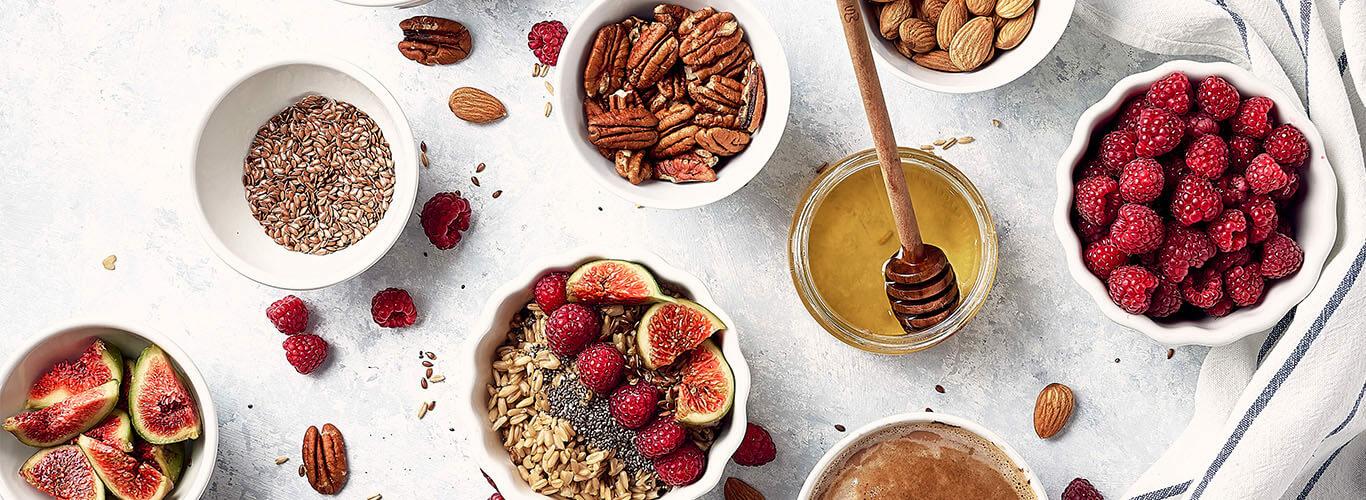
Recommended: Berries (blueberries, raspberries), leafy vegetables (spinach, kale), nuts, seeds.
Why? Antioxidants such as vitamins C, E, and beta-carotene protect egg cells from oxidative damage.
✅ Fiber and probiotic foods
Recommended: Fermented foods, natural yogurts, kefir, fruits and vegetables rich in fiber (e.g., carrots, bananas, leeks).
Why? They support a healthy gut microbiota that regulates estrogen metabolism.
✅ Iron- and folate-rich products
Recommended: Spinach, beets, lentils, oranges, nuts.
Why? Iron supports red blood cell production, and folates are essential for healthy embryo development.
What to avoid to increase your chances of getting pregnant?
❌ Trans fats
Avoid: Processed foods (e.g., chips, sweets, margarine).
Why? Trans fats disrupt hormone receptor function.
❌ Refined carbohydrates
Avoid: White bread, sugar, sugary drinks.
Why? They cause blood sugar spikes, which can negatively affect ovulation.
❌ Excess caffeine
Avoid: More than 1–2 cups of coffee per day.
Why? Too much caffeine may adversely affect hormonal balance.
❌ Alcohol
Why? Alcohol can disrupt sex hormone production and increase the risk of ovulatory disorders.
Are There Differences Between Fertility Diets for Women and Men?
Fertility diets for women and men differ from each other. Although both should be based on minimally processed foods and dietary variety, the recommendations vary in detail.
These differences stem from the different biological mechanisms supporting fertility.
For women, the diet mainly focuses on:
- ovulation regulation,
- hormonal balance,
- protecting egg cells from oxidative damage.
For men, the key aspects include:
- improving sperm quality and motility,
- preventing sperm DNA fragmentation,
- increasing testosterone levels.
Fertility Diet for Men
Although the general principles of a healthy diet are similar, a male fertility-supporting diet differs in several key aspects.
✅ Greater emphasis on zinc, selenium, and lycopene
Men should pay particular attention to consuming zinc and selenium, which are essential for spermatogenesis – the production and motility of sperm. These nutrients are found in oysters, Brazil nuts, and pumpkin seeds.
✅ Higher intake of lycopene
Lycopene, found in tomatoes, protects sperm from oxidative damage.
✅ Antioxidants supporting sperm DNA
Just like in women, antioxidants play a key role in protecting reproductive cells. For men, vitamins C, E, and lycopene are especially recommended.
✅ Animal protein and cholesterol
In men, animal protein is more beneficial than in women. Amino acids like carnitine, found in red meat, support sperm motility.
❌ Avoiding alcohol
In men, alcohol consumption directly affects sperm quality, so it should be kept to a minimum.
A Critical Look at the Fertility Diet
Although the fertility diet is based on solid scientific foundations, it’s important to remember that its effects are always individual. Genetics, chronic conditions, and lifestyle can all modify how effective nutritional recommendations are.
A fertility-supporting diet is not a cure-all. It may be helpful, but it cannot replace infertility treatment, especially in cases related to anatomical abnormalities or severe hormonal disorders.
Importantly, dietary changes should be made in advance. Oocytogenesis – the process of egg cell maturation – takes about 90 days. This means that the effects of the diet may only become visible after several months.
Fertility Diet for Women – Does It Actually Work?
The fertility diet for women is not a myth but a comprehensive approach to improving reproductive health. It’s based on scientifically proven mechanisms such as hormonal regulation, reduction of inflammation, and gut microbiota support.
Although the fertility diet for women differs from the one supporting male fertility, both share a common foundation: a holistic approach to health. For it to be effective, it must be individually tailored and take into account both health and lifestyle factors.
References
Gaskins, A. J., & Chavarro, J. E. (2018). Diet and fertility: a review. American Journal of Obstetrics and Gynecology, 218(4), 379–389.
Legro, R. S., Dodson, W. C., Kunselman, A. R., et al. (2013). Benefit of lifestyle modification in the management of polycystic ovary syndrome. Fertility and Sterility, 100(5), 1430–1439.
https://www.health.harvard.edu/blog/fertility-and-diet-is-there-a-connection-2018053113949
Udostępnij ten artykuł