




 Powrót


Hashimoto’s Diet – Guidelines for Consuming Cabbage, Legumes, and Other Foods Containing Antinutrients
A Hashimoto’s diet often raises questions about the role of antinutrients that may affect thyroid function. Should you completely avoid cabbage, soy, and legumes to protect your thyroid? Or is it enough to process them properly and eat them in moderation? Learn the principles of a Hashimoto’s diet and how to minimize the effects of goitrogenic compounds.
In this article, you will learn:
Hashimoto’s Diet – Should Antinutrients Be Limited?
A common topic when discussing nutrition for people with Hashimoto’s disease is the need to reduce dietary intake of antinutrients:
- Goitrogenic compounds (such as thioglucosides found in cabbage or soy isoflavones found mainly in soy),
- Immune-stimulating compounds (like glycoalkaloids found in potatoes, tomatoes, and other vegetables, and lectins found in legumes).
However, completely eliminating foods containing these substances may do more harm than good. Occasional inclusion of such foods in the Hashimoto’s diet is safe – under certain conditions.
For example, some of these compounds can be significantly reduced by thermal processing. More on that below.
Goitrogenic Compounds – Thioglucosides and Soy Isoflavones
Goiters develop when the synthesis of thyroxine (T4) is inhibited. This leads to lower T4 and consequently less triiodothyronine (T3), which is derived from it.
As a result, the pituitary gland responds by increasing TSH production in an effort to stimulate the thyroid. Eventually, the thyroid enlarges and goiter forms.
This goitrogenic effect is particularly evident when iodine intake is insufficient.
Thioglucosides – Can You Eat Cabbage with Hashimoto’s?
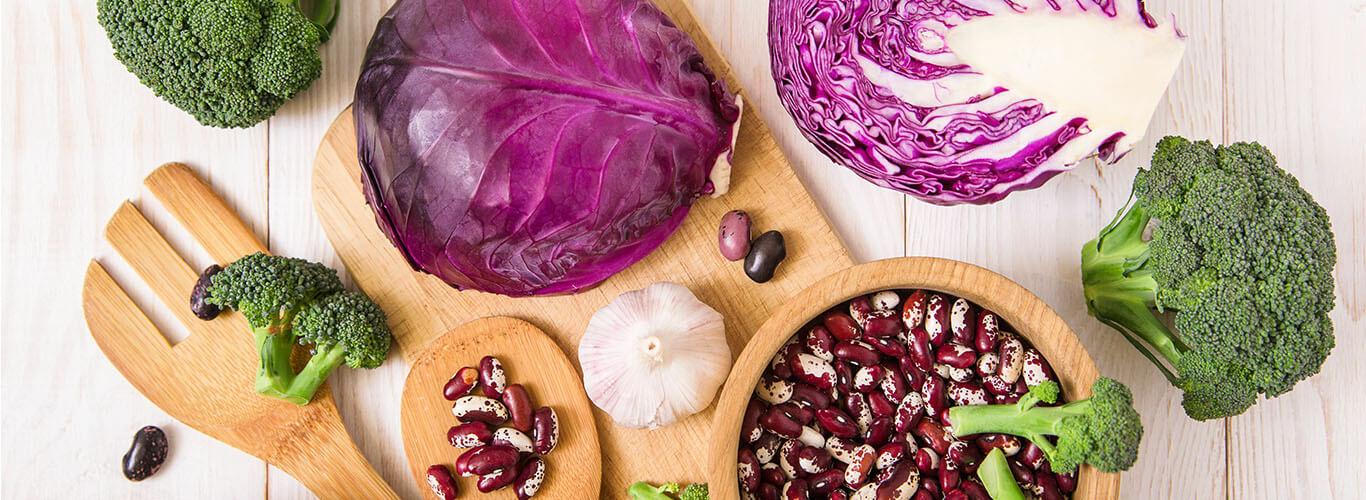
Glucosinolates (thioglucosides) are a group of compounds primarily found in cruciferous vegetables, such as:
- white cabbage,
- red cabbage,
- savoy cabbage,
- napa cabbage,
- Brussels sprouts,
- cauliflower,
- broccoli,
- kale,
- arugula,
- radish,
- kohlrabi,
- horseradish.
Fresh vegetables contain the highest levels of thioglucosides. Their amount varies depending on the plant species and environmental conditions.
Studies show that excessive consumption of glucosinolates may impair thyroid function due to their goitrogenic (thyroid-enlarging) effects.
How to Safely Eat Cruciferous Vegetables with Hashimoto’s?
The goitrogenic effects of these compounds mainly apply to raw, unprocessed vegetables. Cooking them in plenty of water (uncovered) significantly reduces their toxicity, by approximately 30% [(1)].
Glucosinolates also have another side: anti-cancer properties. There’s substantial scientific evidence linking cruciferous vegetable intake with a reduced risk of cancers (e.g., breast, endometrial, cervical, colon, and prostate cancers).
These compounds act early in carcinogenesis, inhibiting cell division and neutralizing free radicals.
Therefore, don’t eliminate cruciferous vegetables entirely from your Hashimoto’s diet. Just eat them in moderation and preferably cooked.
Soy Isoflavones – Is Soy Harmful for the Thyroid?
Soy isoflavones, also goitrogenic, are found mainly in soy, but also in small amounts in:
- pine nuts,
- strawberries,
- millet.
Excessive intake inhibits thyroid peroxidase (TPO), an enzyme that helps incorporate iodine into tyrosine to produce thyroid hormones.
Some reports suggest that soy isoflavones are not deactivated by cooking, which is why people with Hashimoto’s are advised to limit soy intake – especially if iodine deficient [(2)].
Immune-Stimulating Compounds – Glycoalkaloids and Lectins
Glycoalkaloids and lectins are bioactive substances that may stimulate the immune system. In some people, they can irritate the gut and activate immune responses.
Hashimoto’s is an autoimmune condition where the immune system attacks the thyroid. Overstimulation from these compounds may worsen inflammation and accelerate tissue damage.
But that doesn’t mean you must avoid all foods containing them. Individual tolerance varies, and complete elimination is not always necessary.
Glycoalkaloids
Foods from the nightshade family (Solanaceae) such as:
- tomatoes,
- eggplant,
- bell peppers,
- potatoes,
- cherries,
- goji berries,
contain glycoalkaloids. These naturally protect plants by deterring pests.
Key glycoalkaloids include:
- solanine (in potatoes, especially sprouted ones),
- tomatine (in unripe, green tomatoes),
- capsaicin (in peppers),
- lectins and saponins (in legumes and some grains).
You can reduce their content by choosing ripe produce and cooking them (especially in tomatoes and eggplant).
Nightshades are safe for most people and contain beneficial compounds like lycopene and fiber.
Responses vary, so any restriction or elimination should be guided by a dietitian.
Lectins
Lectins are sugar-binding proteins. Although not part of the immune system, they can mimic antibodies by binding to specific antigens.
Lectins can:
- cause agglutination (clumping of red blood cells),
- damage gut lining,
- disrupt intestinal flora.
They bind to epithelial receptors in the gut, damaging villi and digestive enzymes. This reduces nutrient absorption and may overstimulate the immune system, contributing to autoimmune responses, like in Hashimoto’s.
Lectins are found in:
- legumes,
- grains,
- fruits (bananas, melons, plums, strawberries, apples, grapefruits),
- vegetables (onions, leeks, garlic, tomatoes, potatoes).
In legumes, lectins can make up 20% of total protein and are the main antinutrient in these foods.
Cooking is the most effective way to reduce lectins. Most are destroyed by heat, so always cook legumes before eating.
However, some lectins are heat-stable and resist cooking. So it’s best to eat legumes in moderation.
Summary: Hashimoto’s Diet and Antinutrients
Many believe that dietary antinutrients impair thyroid hormone production. What should you do? Use moderation and common sense.
Culinary techniques like soaking and cooking reduce harmful compounds. Eat cruciferous vegetables in moderation and cooked. The same applies to soy and legumes – limit them and always cook thoroughly.
Due to their valuable nutrients, these foods shouldn’t be completely eliminated. Limited consumption doesn’t harm thyroid function.
If you want to ensure your Hashimoto’s diet is well-balanced and effective, consider using a meal plan app like Peater, which helps you design a delicious, personalized nutrition plan tailored to your health needs.
Udostępnij ten artykuł