




 Powrót


Fertility-Boosting Diet – Does It Really Exist and Is It Effective? Key Principles of a Fertility Diet
Are you thinking about starting a family? Unfortunately, many couples today face difficulties with conception. In recent years, the link between diet and fertility has become a growing topic of interest. Scientists are also studying how nutrition affects offspring development and supports infertility treatment. Read on to find out whether a fertility-boosting diet truly exists—and if so, what its core principles are.
In this article, you will learn:

Does a Fertility Diet Really Exist?
Reproductive health is closely connected with overall health, including body weight, hormonal balance, and blood glucose regulation. Nutritional status affects the quality of both egg and sperm cells, supports hormonal stability, and prepares the body for a healthy pregnancy.
The foods you eat, therefore, can influence your ability to conceive. Diet can effectively support fertility in both women and men. On the other hand, a poor diet may significantly reduce your chances of getting pregnant.
Of course, diet is not the only factor involved. In some cases, infertility cannot be resolved by nutrition alone. However, as infertility rates rise in Poland and globally, it’s worth exploring every possible supportive strategy—including diet.
Infertility and Fertility Disorders
Infertility is defined as the inability to conceive despite regular unprotected intercourse for at least 12 months. It affects an increasing number of couples in Poland and around the world. Infertility statistics are alarming, and this issue is now considered one of the major public health challenges of the 21st century.
The Scale of Infertility – Key Statistics
It’s estimated that 15–20% of couples in Poland struggle with infertility. That means roughly one in five couples face difficulties conceiving. Around 1.5 million couples in Poland are affected.
According to the World Health Organization (WHO), as cited by the Polish Society of Reproductive Medicine and Embryology (PTMRiE) and the Polish Society of Gynecologists and Obstetricians (PTGP), 10–15% of couples globally experience fertility problems—impacting nearly 50 million couples worldwide.
Causes of Infertility
Infertility causes are evenly distributed between both sexes:
- Male factors account for around 30–40% of cases—typically related to sperm quality (low count, poor motility, abnormal morphology).
- Female factors account for 40–50%—including ovulation disorders, fallopian tube blockage, endometriosis, or age-related decline in ovarian reserve.
- Mixed or unexplained factors make up 10–20% of cases and are referred to as idiopathic infertility.
Age and Fertility
Fertility issues increase as more couples postpone parenthood. Many modern women have their first child after age 30, which is associated with declining egg quality and increased ovulatory disorders.
After age 35, a woman’s ability to conceive drops sharply. By age 40, the chance of natural conception is only about 5%.
Assisted Reproductive Technologies (ART)
More and more couples are turning to reproductive technologies such as intrauterine insemination (IUI) or in vitro fertilization (IVF). In Poland, over 20,000 IVF procedures were performed in 2022, with a birth rate per IVF cycle of about 30–35%.
Lifestyle, Environment, and Fertility
Environmental and lifestyle factors also play a key role in fertility:
- Chronic stress negatively affects hormonal balance and may contribute to infertility.
- Smoking and excessive alcohol use have proven negative effects on reproductive health.
- Poor diet, obesity, or undernutrition may disrupt hormone regulation and impair fertility in both sexes.
Fertility Diet – Basic Principles
A fertility-supporting diet follows general healthy eating guidelines and aims to:
- normalize body weight,
- stabilize blood glucose levels,
- support hormonal balance,
- improve egg and sperm quality,
- reduce chronic inflammation in the body.
Achieving Healthy Body Weight
Body weight significantly impacts fertility in both men and women. Both overweight and underweight can lead to hormonal disturbances and health issues that hinder conception.
- Overweight and obesity increase the risk of insulin resistance, polycystic ovary syndrome (PCOS), and ovulatory dysfunction. In men, excess weight may reduce testosterone and worsen semen quality.
- Underweight can result in anovulation and nutrient deficiencies (e.g., iron, B vitamins). It also reduces sperm production in men.
Goal: Maintain a healthy BMI between 18.5 and 24.9 to support menstrual cycle regulation, improve ovulation, and optimize sperm production.
Stable Blood Sugar = Stable Hormones
Balanced blood sugar levels are vital for hormonal stability, especially for those with insulin resistance or PCOS. Blood sugar spikes and insulin surges disrupt ovulation and harm reproductive cell quality.
Key strategies:
- Choose low-glycemic index (GI) carbohydrates – slowly digested and help avoid blood sugar spikes.
- Eat regular meals (3–5 per day) to maintain glucose-insulin balance.
- Include protein and fats in every meal – they slow glucose absorption and support hormonal regulation.
Diverse Diet = Reproductive Health
Dietary variety ensures your body receives essential nutrients. Every food group offers specific fertility-supporting benefits.
Core guidelines:
- Plenty of vegetables and fruits – rich in vitamins, minerals, and antioxidants that protect reproductive cells. Aim for at least 5 servings daily, emphasizing vegetables.
- Diverse protein sources – including meat, legumes, fish, eggs, and nuts. Replacing some animal protein with plant-based options may support fertility.
- Healthy fats – unsaturated fats (especially omega-3s) are vital for hormone production and reducing inflammation.
- Whole grains – provide fiber for gut health and blood sugar regulation.
- Dairy – choose full-fat options for protein, calcium, and vitamin D, all important for hormone health and fetal development.
Avoid Harmful Substances
Know what to include—also know what to avoid:
- Alcohol – decreases sex hormone levels and semen quality; disrupts ovulation in women.
- Caffeine – high intake (>200–300 mg/day or 2–3 cups of coffee) may impair fertility and raise miscarriage risk.
- Trans fats – found in processed foods (cookies, chips, fast food) harm insulin sensitivity and hormonal balance.
Fertility-Boosting Nutrients: What to Eat
Here are the key nutrients that support fertility in both men and women:
| Nutrient | Function | Sources |
|---|---|---|
| Folic Acid (Vitamin B9) | Prevents neural tube defects, supports cell division and ovulation | Leafy greens, legumes, citrus fruits, avocados, fortified grains |
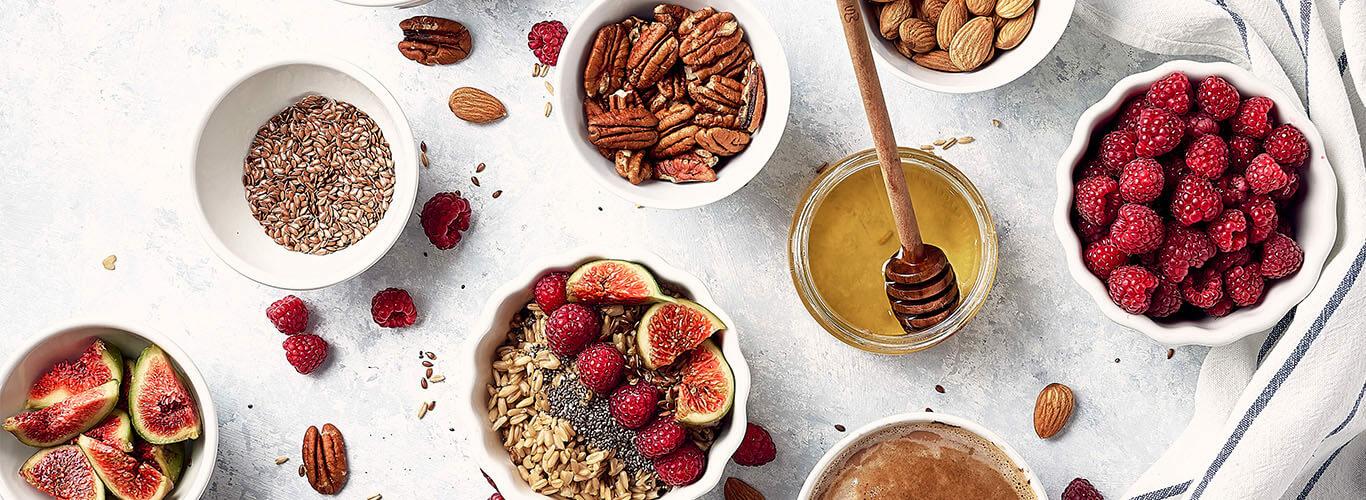
| Omega-3 Fatty Acids (DHA) | Improves sperm quality, egg cell development, menstrual regulation, and reduces inflammation | Fatty fish (salmon, mackerel), flaxseed, chia seeds, flaxseed oil |
| Vitamin D | Regulates reproductive hormones, supports embryo implantation | Fatty fish, cod liver oil, fortified dairy, eggs, sunlight |
| Vitamin E | Antioxidant that protects reproductive cells; improves egg and sperm health | Nuts, seeds, olive/sunflower oil, leafy greens |
| Zinc | Essential for hormone balance; supports testosterone and ovulation | Oysters, meat, pumpkin seeds, legumes |
| Selenium | Antioxidant that supports sperm motility and thyroid health (important for fertility) | Brazil nuts, fish, meat, whole grains |
| Iron (esp. heme iron) | Supports ovulatory and menstrual health; prevents anemia | Red meat, poultry, fish, spinach, legumes, fortified grains |
| Antioxidants (e.g., C, E, selenium, carotenoids) | Neutralize free radicals that damage egg/sperm cells | Neutralize free radicals that damage egg/sperm cells Colorful fruits & vegetables, nuts, seeds |
Udostępnij ten artykuł